The Power of Why

Since our recent launch of Flexible Search for DNSDB 2.0, I’ve had a moment to reflect on what makes the team here at Farsight Security so special. I could go on for days about the skills, talents, and energy of my coworkers. However, looking at those aspects alone, you could easily miss what I think is the most important factor to our success. While I’m often asked what Farsight does or how we do it, rarely am I asked the most powerful question which is simply — why? Why do we feel so much pride in the work we do? Why do we use these years to work at Farsight versus somewhere else? Why do we make the product design decisions we do?
The answer to “why” can be boiled down into three core assertions:
- We believe that people and companies ought to have a reasonable expectation of safety when using the Internet.
- We make this possible by inventing and delivering new ways for Internet defenders to think, work, and act.
- We offer observation-based products and services that bring defenders into the here and now where they can win.
At first glance, these are three simple sentences. However, they are loaded with nuance. Let’s unpack a few key elements:
- “people and companies” – We don’t stop at serving our customers. Farsight is all about community. We offer grants to law enforcement, academic researchers and internet superheroes since the early days of DNSDB. It’s part of our commitment to our sensor community, who shares data with us, trusting that we will get our products into the hands of the people who will use it to improve the expectation of safety.
- “think, work, and act” – We aim to meet our customers in their existing workflow. You already have existing tools and platforms. We want to integrate and add value to your process with minimal disruption.
- “observation-based” – Our goal is to transcend reputation and provide observational intelligence and the tools that you can use to apply your own logic tailoring it to your environment.
- “here and now” – Real-time data is at the core of everything we do. The actors you spend your day defending against are attacking you in real-time. Why should your defense be slower?
Leadership has a Critical Role
As Simon Sinek said, “A small team, committed to a cause bigger than themselves, can achieve absolutely anything.” I have been immensely fortunate to have been a member of three such teams throughout my career. If you had asked me 10 years ago what the key factor to creating an amazing team was, I would have told you it was all in the leadership. Now having spent more time in leadership I can now say having that good leadership is important, but nothing is as powerful as a shared “why”. Looking back, having a shared “why” was the true predictor of success. Good leadership is important, mutual trust is critical, resourcing sure helps, however the true force multiplier is having a unified “why”.
In the military they use the term “Commander’s Intent”. This is the idea that if your team understands why they are doing a thing, they will be better able to adapt to changes in field conditions. By understanding your definition of success, a member of your team is in a position to take the correct action towards the larger goal even if their task isn’t going to plan.
If your people are in the dark about the “why”, you will be bogged down by a constant stream of questions when things don’t go as expected. Sharing the “why” can feel risky. It feels like you are giving up control. In reality you are just trusting your people to do the job you hired them to do. You are enabling your team to work at their potential rather than limiting them to working at the speed at which you can manage.
This concept applies at all levels. Jr. Developers need to know how their task fits into the larger project, just as a director needs to know how their program fits in with the revenue plan for the year, and everyone should know how the organization hopes to leave an impact on human history. It is beneficial for your shared “why” to be somewhat “lofty”. Make sure that the whole team can visualize what the end result means to them. This can work even if leadership isn’t up to the task. I’ve seen cases where leadership had one idea of what was important and the team coalesced around and succeeded based on some other shared “why”.
Conclusion
My personal ethos developed over years of backpacking and appreciating the majestic beauty of nature. We will all eventually leave this life, when it’s my turn I want to leave it a better place than I found it. From my chair, it is not likely that I will drive any global policy change. I can however take steps that reduce the effectiveness of crimes committed by the unproductive fraction of society against those who do or will someday create that value. From there it’s an easy jump for me to Farsight’s three core assertions.
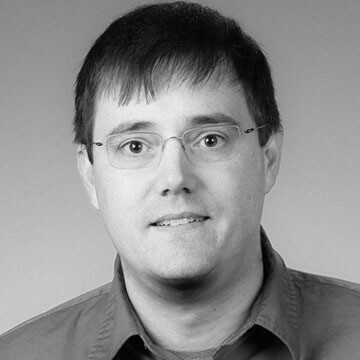
Ben April is the Chief Technology Officer for Farsight Security, Inc.